
Latest Articles
-
Oct- 2021 -21 OctoberSpace
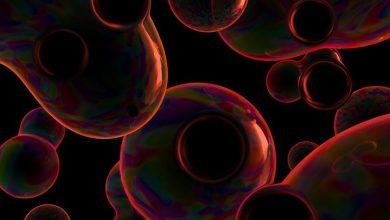
Uncovering the Secrets of Ultra-Low Frequency Gravitational Waves and the Early Development of Our Universe
Lead image: An artist’s impression of the colliding bubbles that can produce extremely low frequency gravitational waves during a cosmological phase transition in the early Universe. Credit: Riccardo Buscicchio New methods of detecting ultra-low frequency gravitational waves can be combined with other, less sensitive measurements to deliver fresh insights into the early development of our universe, according to researchers at the University of Birmingham. Gravitational waves — ripples in the fabric of Einstein’s spacetime — that cross the universe at the speed of light have all sorts of wavelengths, or frequencies. Scientists have not yet managed to detect gravitational waves…
Read More » -
21 OctoberScience Mysteries
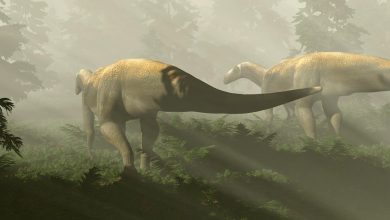
“Largest Meat-Eating Predatory Dinosaur” of Triassic Period, Actually a Timid Vegetarian
Lead image: Life reconstruction of herbivorous dinosaurs based on 220-million-year-old fossil footprints from Ipswich, Queensland, Australia. Credit: Anthony Romilio “Raptor-like” dinosaur discovered in an Australian mine, actually uncovered as a timid vegetarian. 50-year-old findings of the Triassic period’s “largest meat-eating dinosaur” reanalyzed as the long-necked herbivore Prosauropod. Fossil footprints found in an Australian coal mine around 50 years ago have long been thought to be that of a large ‘raptor-like’ predatory dinosaur, but scientists have in fact discovered they were instead left by a timid long-necked herbivore. University of Queensland paleontologist Dr. Anthony Romilio recently led an international team to…
Read More » -
20 OctoberClimate Change
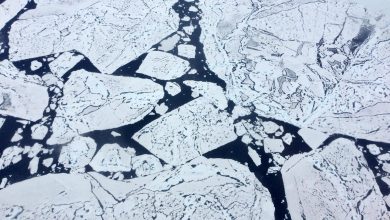
Five Fascinating Facts to Help You Understand Sea Ice
One way that scientists monitor climate change is through the measure of sea ice extent. Sea ice extent is the area of ice that covers the Arctic Ocean at a given time. Sea ice plays an important role in reflecting sunlight back into space, regulating ocean and air temperature, circulating ocean water, and maintaining animal habitats. NASA and the National Snow and Ice Data Center in Boulder, Colorado, use satellites to observe sea ice extent. Over the past several decades, Arctic sea ice extent has been steeply declining year-round, especially in late summer when it reaches its minimum for the…
Read More » -
20 OctoberDNA
So-Called Junk DNA – Genetic “Dark Matter” – Is Actually Critical to Survival in Mammals
Knocking out transposon promoter leads to pup death in mice; similar promoters found in many mammals. Nearly half of our DNA has been written off as junk, the discards of evolution: sidelined or broken genes, viruses that got stuck in our genome and were dismembered or silenced, none of it relevant to the human organism or human evolution. But research over the last decade has shown that some of this genetic “dark matter” does have a function, primarily in regulating the expression of host genes — a mere 2% of our total genome — that code for proteins. Biologists continue…
Read More » -
18 OctoberScience

Precision Medicine Data Dive Shows “Water Pill” Could Potentially Be Repurposed To Treat Alzheimer’s
Lead image: Diuretics, which are sometimes called “water pills,” help your body expel extra water and salt as urine. NIH-funded research reveals clinical trial candidate for those with genetic risk. A commonly available oral diuretic pill approved by the U.S. Food and Drug Administration may be a potential candidate for an Alzheimer’s disease treatment for those who are at genetic risk, according to findings published in Nature Aging. The research included analysis showing that those who took bumetanide — a commonly used and potent diuretic — had a significantly lower prevalence of Alzheimer’s disease compared to those not taking the drug.…
Read More »