Latest Articles
-
Sep- 2021 -23 SeptemberScience
A New Approach for Recycling Plastics
Each human being uses, on average, 30 kg of plastic per year. Given that global life expectancy currently stands at approximately 70 years, each person will discard some two metric tons of plastic in his or her lifetime. Multiply that by the number people on earth – which is growing constantly – and the total is staggering. In light of this, Francesco Stellacci, a full professor and head of the Supramolecular Nanomaterials and Interfaces Laboratory at EPFL’s School of Engineering, began thinking about whether there was a way to solve the problem of used plastics and recycle it more effectively.…
Read More » -
22 SeptemberFuture
Technology Is Expanding Your List of Eye Care Treatments
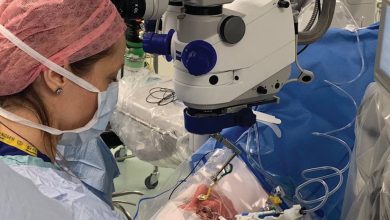
Technology is expanding your eye care treatment options. Here are some of the popular advances in vision care: from LASIK to mobile health technology.
Read More » -
20 SeptemberNutrition
Kids Eating Fast Food More Often Since Pandemic – Parents Say They’re Too Stressed To Cook
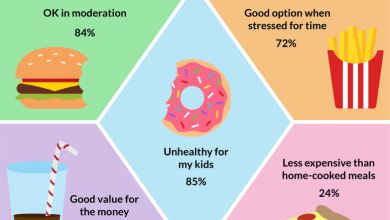
Lead image: While almost all parents agree that fast food is unhealthy for their children, many also feel it’s OK in moderation. Credit: University of Michigan Health C.S. Mott Children’s Hospital National Poll on Children’s Health. 1 in 5 parents say kids eat fast food more often since COVID pandemic started. 1 in 5 parents say they’re too stressed to cook and 1 in 6 say their child eats fast food at least twice a week. For some families, pandemic times have meant increased screen time, attending class from bedrooms, and maybe even more dinners from a drive through. While…
Read More » -
19 SeptemberSpace

Extensive Chemical Composition Mapping Reveals Carbon-Rich, Organic Birth Environments of Planets
Lead image: This composite image of ALMA data from the young star HD 163296 shows hydrogen cyanide emission laid over an artist’s impression of a starfield. The MAPS project zoomed in on hydrogen cyanide and other organic and inorganic compounds in planet-forming disks to gain a better understanding of the compositions of young planets and how the compositions link to where planets form in a protoplanetary disk. Credit: ALMA (ESO/NAOJ/NRAO)/D. Berry (NRAO), K. Öberg et al (MAPS) Scientists connect the dots between where planets form and what they’re made of. An international collaboration of scientists using the Atacama Large Millimeter/submillimeter…
Read More » -
19 SeptemberScience-Tech
Layered Graphene with a Twist Displays Unique Quantum Confinement Effects in 2-D
Understanding how electrons move in 2-D layered material systems could lead to advances in quantum computing and communication. Scientists studying two different configurations of bilayer graphene—the two-dimensional (2-D), atom-thin form of carbon—have detected electronic and optical interlayer resonances. In these resonant states, electrons bounce back and forth between the two atomic planes in the 2-D interface at the same frequency. By characterizing these states, they found that twisting one of the graphene layers by 30 degrees relative to the other, instead of stacking the layers directly on top of each other, shifts the resonance to a lower energy. From this…
Read More »