
Latest Articles
-
Dec- 2022 -21 DecemberQuantum Physics

What Is Quantum Entanglement? A Physicist Explains Einstein’s “Spooky Action at a Distance”
Lead Image: When two particles are entangled, the state of one is tied to the state of the other. Quantum entanglement is a phenomenon in which the quantum states of two or more objects become correlated, meaning that the state of one object can affect the state of the other(s) even if the objects are separated by large distances. This occurs because, according to quantum theory, particles can exist in multiple states at the same time (a concept known as superposition) and can be inextricably linked, or “entangled,” even if they are physically separated. Three researchers were awarded the 2022…
Read More » -
20 DecemberNASA

Researchers Discover Water Filled Exoplanets using Hubble and Spitzer Telescopes
Lead image: Artist’s illustration of the Kepler-138 system, with Kepler-138d in the foreground, Kepler-138c to the left, and Kepler-138b transiting the red dwarf in the background. Credit: NASA/ESA/Leah Hustak (STScI) Using data from NASA’s Hubble Space Telescope and retired Spitzer Space Telescope, a group of researchers has discovered two exoplanets that may be largely comprised of water. Located around a red dwarf star 218 light-years away, the two planets are low in density. Furthermore, the researchers, led by Caroline Piaulet of the Trottier Institute for Research on Exoplanets at the University of Montreal, found evidence of an additional planet that…
Read More » -
20 DecemberDNA
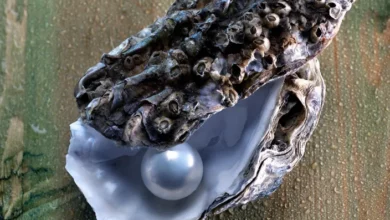
Genetic Research Reveals Molecular Fingerprint Behind Beautiful Pearls
Lead Image: Researchers have constructed a high-quality, chromosome-scale genome of pearl oysters, which they hope can be used to find resilient strains. In Japan, pearl oysters are a key animal for aquaculture because they generate valuable, beautiful pearls. The output of Akoya pearls has decreased over the past 20 years from about 70,000 kg per year to barely 20,000 kg per year due to a variety of reasons, including disease. Researchers have built a high-quality, chromosome-scale genome of a pearl oyster in the goal of uncovering resilient variants and to learn more about their underlying genetics. With the utilization of…
Read More » -
20 DecemberBrain

Surprise Protector of Females’ Brains: Subcutaneous Fat
Lead Image: According to new research, subcutaneous fat, which is more common in females, is protective against brain inflammation. Females’ propensity toward subcutaneous fat, which is fat stored under the skin, often in places like their hips, buttocks, and the backs of their arms, is protective against brain inflammation, at least until menopause. This is according to a new study by scientists at the Medical College of Georgia at Augusta University. It is important because brain inflammation can contribute to serious problems such as dementia and stroke. Males of essentially any age, on the other hand, have a greater propensity…
Read More » -
19 DecemberBrain

Harvard Researchers Shed New Light on Frontotemporal Dementia
Lead Image: The new research has made strides in understanding the mechanism behind a type of dementia that affects young people. New research offers insight into the basic biology of frontotemporal dementia caused by a particular genetic mutation. At a glance: New findings offer insight into the basic biology of frontotemporal dementia, a devastating neurodegenerative disorder caused by a specific genetic mutation. Researchers revealed that a genetic form of frontotemporal dementia is connected with abnormal lipid accumulation in the brain, which is caused by disrupted cell metabolism. The research reveals a fundamental component of the process that leads to frontotemporal…
Read More »