
Latest Articles
-
Dec- 2021 -30 DecemberEnvironment
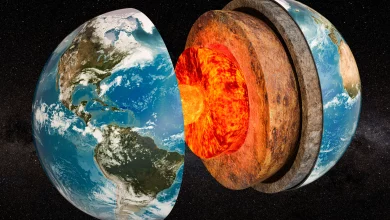
Possible Chemical Leftovers From Early Earth Sit Near the Planet’s Core
A simulation of the evolution of the Earth’s interior over time, showing the thermal (bottom), chemical (middle), and thermochemical evolution under the simulated conditions. The bottom of each field is the core-mantle boundary. Ultra-low velocity zones can be seen in the top and middle fields, forming at the toes of the light blue zones. Credit: Surya Pachhai Let’s take a journey into the depths of the Earth, down through the crust and mantle nearly to the core. We’ll use seismic waves to show the way, since they echo through the planet following an earthquake and reveal its internal structure like…
Read More » -
29 DecemberAstronomy

At Least 70 Free-Floating Planets Discovered in a Nearby Region of the Milky Way
Lead Image: An artist’s impression of a free-floating planet. Using observations and archival data from several of NSF’s NOIRLab’s observatories, together with observations from telescopes around the world and in orbit, astronomers have discovered at least 70 new free-floating planets — planets that wander through space without a parent star — in a nearby region of the Milky Way known as Upper Scorpius OB stellar association. Credit: NOIRLab/NSF/AURA/J. da Silva The more than 70 sunless worlds are each roughly the mass of Jupiter. Using observations and archival data from several of NSF’s NOIRLab’s observatories, together with observations from telescopes around…
Read More » -
16 DecemberESA
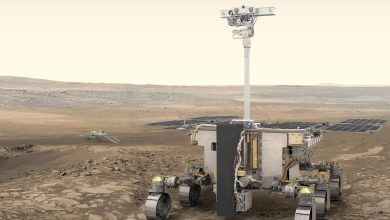
Double Drop Test Success for ExoMars Mission Parachutes
Lead Image: Artist’s impression of ESA’s ExoMars rover (foreground) and Russia’s science platform (background) on Mars. Credit: ESA/ATG medialab The largest parachute set to fly on Mars has completed its first successful high-altitude drop test, a critical milestone for ensuring the ExoMars mission is on track for launch in 2022. Both the first and second stage parachutes have now successfully flown this year. A pair of high-altitude drop tests took place in Oregon on November 21 and December 3 as part of the ongoing parachute testing to ensure the safe delivery of the ExoMars Rosalind Franklin rover and Kazachok lander…
Read More » -
16 DecemberNASA
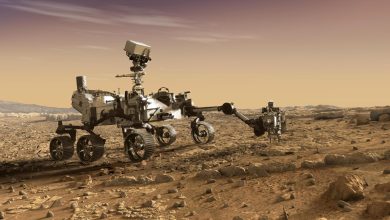
Surprising Discoveries on Mars: NASA Presents New Findings From Perseverance Mars Rover
Lead Image: This illustration depicts NASA’s Mars 2020 rover studying rocks with its robotic arm. Credit: NASA/JPL-Caltech The findings by rover scientists highlight the diversity of samples geologists and future scientists associated with the agency’s Mars Sample Return program will have to study. Scientists with NASA’s Perseverance Mars rover mission have discovered that the bedrock their six-wheeled explorer has been driving on since landing in February likely formed from red-hot magma. The discovery has implications for understanding and accurately dating critical events in the history of Jezero Crater – as well as the rest of the planet. The team has…
Read More » -
16 DecemberNanotech
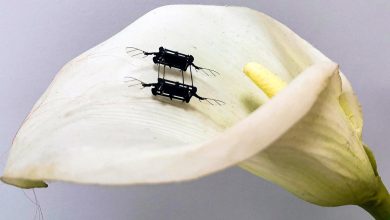
Giving Bug-Like Bots a Boost: New Artificial Muscles Improve the Performance of Flying Microrobots
MIT researchers have pioneered a new fabrication technique that enables them to produce low-voltage, power-dense, high endurance soft actuators for an aerial microrobot. Credit: Courtesy of the researchers A new fabrication technique produces low-voltage, power-dense artificial muscles that improve the performance of flying microrobots. When it comes to robots, bigger isn’t always better. Someday, a swarm of insect-sized robots might pollinate a field of crops or search for survivors amid the rubble of a collapsed building. MIT researchers have demonstrated diminutive drones that can zip around with bug-like agility and resilience, which could eventually perform these tasks. The soft actuators…
Read More »