
Latest Articles
-
Dec- 2021 -16 DecemberNanotech
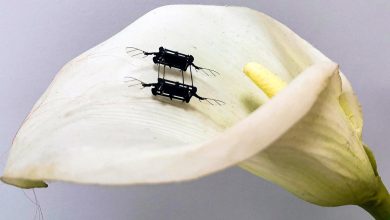
Giving Bug-Like Bots a Boost: New Artificial Muscles Improve the Performance of Flying Microrobots
MIT researchers have pioneered a new fabrication technique that enables them to produce low-voltage, power-dense, high endurance soft actuators for an aerial microrobot. Credit: Courtesy of the researchers A new fabrication technique produces low-voltage, power-dense artificial muscles that improve the performance of flying microrobots. When it comes to robots, bigger isn’t always better. Someday, a swarm of insect-sized robots might pollinate a field of crops or search for survivors amid the rubble of a collapsed building. MIT researchers have demonstrated diminutive drones that can zip around with bug-like agility and resilience, which could eventually perform these tasks. The soft actuators…
Read More » -
16 DecemberNASA
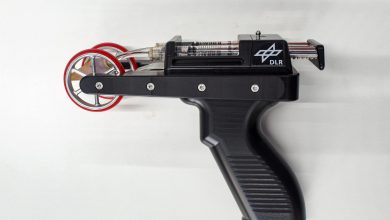
Check Out the Amazing Science Experiments Riding to Space Station Aboard the 24th SpaceX Cargo Mission
Bioprinting, a subcategory of 3D printing, uses viable cells and biological molecules to print tissue structures. Bioprint FirstAid Handheld Bioprinter (Bioprint FirstAid), an investigation from European Space Agency (ESA), demonstrates a portable, handheld bioprinter that uses a patient’s own skin cells to create a tissue-forming patch to cover a wound and accelerate the healing process. Credit: Courtesy of OHB/DLR/ESA The 24thSpaceX cargo resupply services mission, targeted to launch in late December from NASA’s Kennedy Space Center in Florida, carries scientific research and technology demonstrations to the International Space Station. The experiments aboard include studies of bioprinting, crystallization of monoclonal antibodies,…
Read More » -
7 DecemberScience
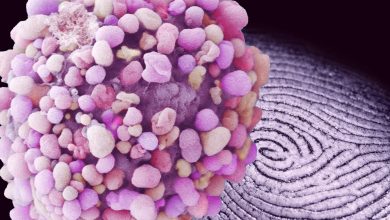
Solid, Liquid, or Gas? Visual “Fingerprints” Quickly Identify Physical State of Tissues and Cancer Tumors
MIT researchers have developed a way to decode images of cells to determine whether a tissue is more like a solid, liquid, or even a gas. These visual “fingerprints” may help to quickly diagnose and track various cancers. Credit: breast cancer cell by Anne Weston, Francis Crick Institute, edited by MIT News The method could be a route to quicker, less invasive cancer diagnoses. As an organism grows, the feel of it changes too. In the initial stages, an embryo takes on an almost fluid-like state that allows its cells to divide and expand. As it matures, its tissues and…
Read More » -
7 DecemberAstronomy

Astrophysicists Reveal Largest-Ever Suite of Universe Simulations – How Gravity Shaped the Distribution of Dark Matter
To understand how the universe formed, astronomers have created AbacusSummit, more than 160 simulations of how gravity may have shaped the distribution of dark matter. Collectively clocking in at nearly 60 trillion particles, a newly released set of cosmological simulations is by far the biggest ever produced. The simulation suite, dubbed AbacusSummit, will be instrumental for extracting secrets of the universe from upcoming surveys of the cosmos, its creators predict. They present AbacusSummit in several recently published papers in the Monthly Notices of the Royal Astronomical Society. AbacusSummit is the product of researchers at the Flatiron Institute’s Center for Computational…
Read More » -
7 DecemberNanotech
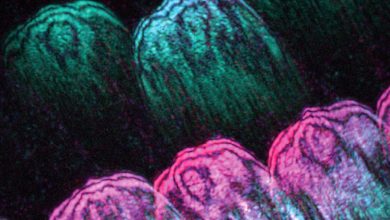
Peeking Into a Chrysalis, Incredible Videos Capture Butterfly Wings Forming During Metamorphosis
Lead Image: Larger, overlapping scales in red and green begin to form their structural details midway through development (right). Each image is 75 μm wide. Credit: Anthony McDougal and Sungsam Kang The findings could inform the design of new materials such as iridescent windows or waterproof textiles. If you brush against the wings of a butterfly, you will likely come away with a fine sprinkling of powder. This lepidopteran dust is made up of tiny microscopic scales, hundreds of thousands of which paper a butterfly’s wings like shingles on a wafer-thin roof. The structure and arrangement of these scales give…
Read More »