
Latest Articles
-
Nov- 2021 -2 NovemberClimate Change
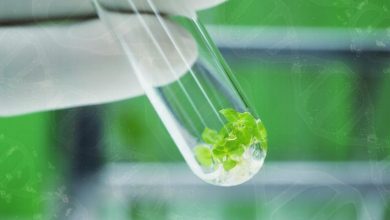
“Genetic Goldmine” Uncovered for Plant Survival in One of the Harshest Environments on Earth
Evolutionary genomics approach identifies genes that enable plants to live in the Atacama Desert, offering clues for engineering more resilient crops to face climate change. An international team of researchers has identified genes associated with plant survival in one of the harshest environments on Earth: the Atacama Desert in Chile. Their findings, published in Proceedings of the National Academy of Sciences (PNAS), may help scientists breed resilient crops that can thrive in increasingly drier climates. “In an era of accelerated climate change, it is critical to uncover the genetic basis to improve crop production and resilience under dry and nutrient-poor…
Read More » -
2 NovemberQuantum Computing
Amazon and Caltech Partner to Create New Quantum Computing Hub
The partnership could lead to pioneering quantum computing technologies for a range of fields. This past year, a new two-story building took shape in the northeast corner of the Caltech campus. Though modest in design, what takes place inside the structure could transform the future of computing. The building is the AWS Center for Quantum Computing, the result of a partnership between Caltech and Amazon Web Services, the cloud-computing branch of Amazon. The goal of the collaboration is to create quantum computers and related technologies that have the potential to revolutionize data security, machine learning, medicine development, sustainability practices, and…
Read More » -
2 NovemberESA
Hear and Feel BepiColombo Spacecraft’s First Tastes of Mercury Science
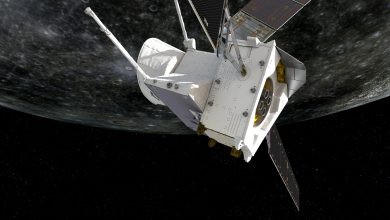
Artist impression of BepiColombo flying by Mercury. The spacecraft makes nine gravity assist maneuvers (one of Earth, two of Venus and six of Mercury) before entering orbit around the innermost planet of the Solar System in 2025. Credit: ESA/ATG medialab The magnetic and particle environment around Mercury was sampled by BepiColombo for the first time during the mission’s close flyby of the planet at 199 km on 1-2 October 2021, while the huge gravitational pull of the planet was felt by its accelerometers. The magnetic and accelerometer data have been converted into sound files and presented here for the first…
Read More » -
2 NovemberClimate Change
Methane Observatory Launched To Boost Action on Powerful Climate-Warming Greenhouse Gas
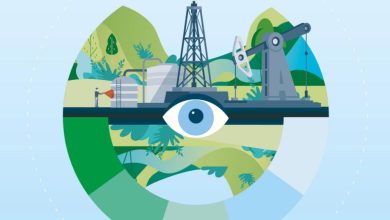
Lead Image: The International Methane Emissions Observatory (IMEO) is releasing its first annual report on Sunday, October 31, 2021. The release coincides with the G20 Summit in Rome and takes place just a few days ahead of the beginning of the 2021 UN Climate Change Conference (COP26) in Glasgow. This report describes how state actors can take action to curb methane emissions from the fossil fuel industry, and what progress has been made as part of the decarbonization process, particularly in the energy sector. IMEO’s annual report seeks to provide decision-makers with a framework of action to track and monitor…
Read More » -
2 NovemberNASA
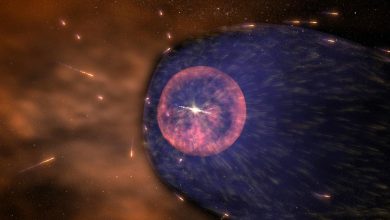
Mysteries Abound: NASA Studying the Edge of the Sun’s Magnetic Bubble
An illustration of the heliosphere being pelted with cosmic rays from outside our solar system. Credit: NASA’s Goddard Space Flight Center/Conceptual Image Lab Our corner of the universe, the solar system, is nestled inside the Milky Way galaxy, home to more than 100 billion stars. The solar system is encased in a bubble called the heliosphere, which separates us from the vast galaxy beyond – and some of its harsh space radiation. We’re protected from that radiation by the heliosphere, which itself is created by another source of radiation: the Sun. The Sun constantly spews charged particles, called the solar…
Read More »