Latest Articles
-
Nov- 2021 -2 NovemberSpace
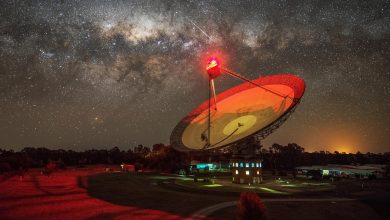
Breakthrough Listen: Mysterious Signal “From” Proxima Centauri Probably Not Alien Civilization
The Parkes radio telescope in Australia. Credit: CSIRO An intriguing candidate signal picked up last year by the Breakthrough Listen project has been subjected to intensive analysis that suggests it is unlikely to originate from the Proxima Centauri system. Instead, it appears to be an artifact of Earth-based interference from human technologies, the Breakthrough Initiatives announced today. Two research papers, published in Nature Astronomy, discuss both the detection of the candidate signal and an advanced data analysis process that can finely discern “false positives.” “The significance of this result is that the search for civilizations beyond our planet is now…
Read More » -
2 NovemberNutrition

New Nutrition Research: 10 Features of a Heart-Healthy Eating Pattern
In a new statement on diet and heart health, the American Heart Association presents 10 key features of a heart-healthy eating pattern that can help reduce heart disease and stroke risk at all stages of life. The new statement emphasizes an overall dietary pattern to support cardiovascular health and general wellbeing that accommodates personal preferences, ethnic and religious practices, and life stages. For the first time, the Association summarizes evidence that addresses sustainability, noting that heart-healthy eating patterns are also good for the environment. Also for the first time, the statement enumerates several challenges including societal factors that make it…
Read More » -
2 NovemberNeutrons
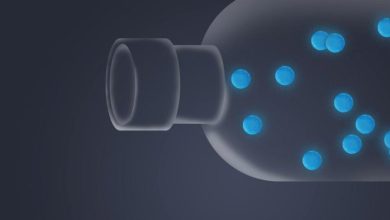
How Long Does a Neutron Live? Physicists Make Most Precise Measurement Yet
Physicists use “bottle” method to make most precise measurement yet of a neutron’s lifetime. Particles called neutrons are typically very content inside atoms. They stick around for billions of years and longer inside some of the atoms that make up matter in our universe. But when neutrons are free and floating alone outside of an atom, they start to decay into protons and other particles. Their lifetime is short, lasting only about 15 minutes. Physicists have spent decades trying to measure the precise lifetime of a neutron using two techniques, one involving bottles and the other beams. But the results…
Read More » -
2 NovemberNASA
Upgrading the Space Station’s Cold Atom Physics Laboratory With Mixed Reality
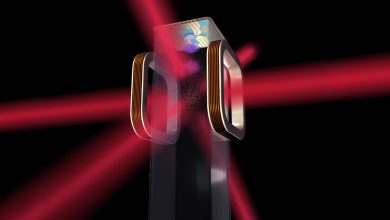
NASA is looking into whether mixed reality technology could help with repairs and upgrades on the cutting-edge Cold Atom Lab aboard the space station. NASA’s Cold Atom Lab is a first-of-its-kind physics laboratory operating in Earth orbit. About the size of a mini-fridge, it hosts multiple experiments that explore the fundamental nature of atoms by cooling them down to nearly absolute zero (the coldest temperature matter can reach). The ultracold atoms provide a window into the quantum realm, where matter exhibits strange behaviors that underpin many modern technologies. In 2020, during her extended stay aboard the space station, NASA astronaut…
Read More » -
2 NovemberNASA
James Webb Space Telescope: An Astronomer on the Team Explains the “First Light Machine”
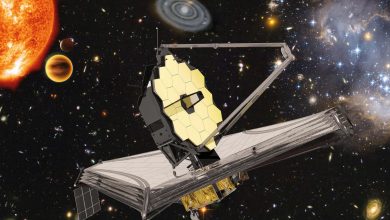
Artist’s impression of the NASA/ESA/CSA James Webb Space Telescope. Credit: ESA, NASA, S. Beckwith (STScI) and the HUDF Team, Northrop Grumman Aerospace Systems / STScI / ATG medialab The James Webb Space Telescope is scheduled to head to space on December 18, 2021. With it, astronomers hope to find the first galaxies to form in the universe, will search for Earthlike atmospheres around other planets and accomplish many other scientific goals. I am an astronomer and the principal investigator for the Near Infrared Camera – or NIRCam for short – aboard the Webb telescope. I have participated in the development…
Read More »