
Latest Articles
-
Jul- 2023 -29 JulyEnvironment
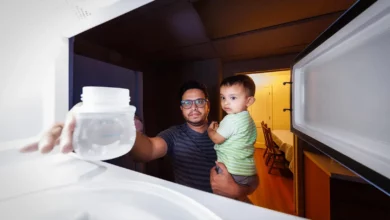
Nano Nightmare: Billions of Nanoplastics Released When Microwaving Baby Food Containers
Lead Image: Kazi Albab Hussain (left) holds his son while removing a plastic container of water from a microwave. Hussain and colleagues at the University of Nebraska–Lincoln have found that microwaving such containers can release up to billions of nanoscopic particles and millions of microscopic ones. Credit: Craig Chandler, University of Nebraska–Lincoln Exposure to particles from baby food containers kills up to 75% of cultured kidney cells. The fastest way to heat food and drink might also rank as the quickest route to ingesting massive quantities of minuscule plastic particles, says new research from the University of Nebraska–Lincoln. Experiments have…
Read More » -
19 JulyAI

Will Artificial Intelligence End Civilization?
Lero and University College Cork are conducting a ten-minute survey to understand public opinions on AI and software, focusing on concerns such as biases and ethical implications. The study aims to highlight the public’s role in driving responsible AI development. Researchers are conducting a public survey to gauge opinions on artificial intelligence (AI) and software in general, aiming to better understand public perceptions, fears, and hopes about AI’s impact on society. Will artificial intelligence (AI) end civilization? Researchers at Lero, the Science Foundation Ireland Research Centre for Software and University College Cork, are seeking help determining what the public believes…
Read More » -
19 JulyArcheology
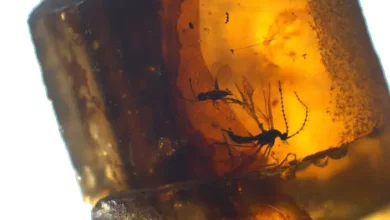
Solving a Paleontological Puzzle: Why Do We Find So Much Amber in Cretaceous Rocks?
Lead Image: Insects preserved in an amber piece from El Soplao in Cantabria (Spain). Credit: Xavier Delclòs, UB-IRBio New research delves into the enigma of the mass production of resin during the Cretaceous period, which led to the formation of amber. It emphasizes amber’s significance in understanding ancient ecosystems and their organisms, and suggests that widespread coniferous forests and specific environmental conditions contributed to this phenomenon. The study highlights the Cretaceous period’s importance in understanding today’s ecosystems and organisms’ evolutionary origins. What would a traveler from the future think if one day s/he could analyze the rocks that are currently…
Read More » -
18 JulyBrain

Stanford Researchers Treat Depression by Reversing Brain Signals Traveling the Wrong Way
Lead Image: A research team led by Stanford Medicine found that transcranial magnetic stimulation (TMS), used for treating severe depression, works by reversing the abnormal brain signals. The study also revealed a potential biomarker for diagnosing depression — the backward flow of neural activity between key areas of the brain. Applying powerful magnetic pulses to the skull to stimulate the brain can rapidly alleviate symptoms in many severely depressed individuals for whom traditional treatments have been ineffective. Yet, how transcranial magnetic stimulation — the name for this treatment — alleviates depression has remained a mystery. Now, new research led by…
Read More » -
17 JulyDigital Media

5 Tips To Consider When Building an Effective Website
A website is crucial for businesses and individuals to establish their online presence. A well-designed website can help attract new customers, showcase your brand, and drive growth. However, building a website may seem daunting, with so many options and variables to consider. This guide will explore five tips to help you build an effective website. 1. Define Your Purpose and Goals Before you start building your website, defining its purpose and goals is crucial. Ask yourself what you want to achieve with your website. Is it to showcase your products or services, drive sales, or provide information? Once you’ve established…
Read More »